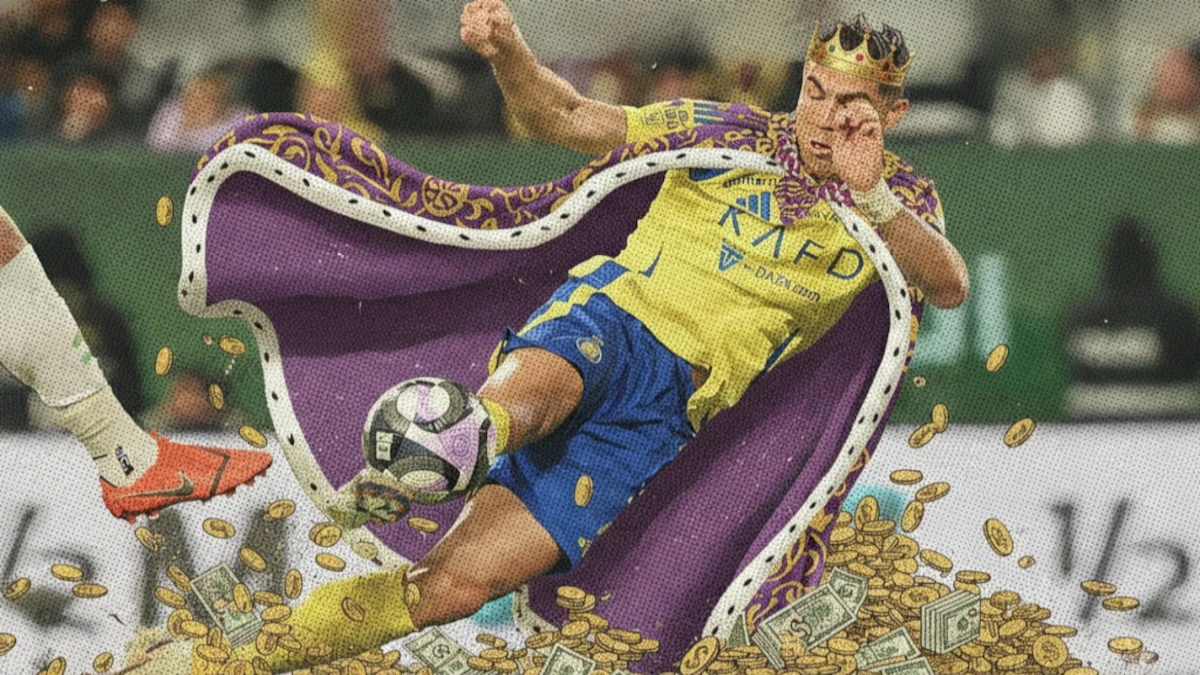
The number is almost obscene: $1.4 billion. That's what Cristiano Ronaldo is worth as of October 2025, making him the first footballer to crack the ten-figure barrier through the beautiful game itself.
Confirmed by the Bloomberg Billionaires Index, Ronaldo's achievement marks a watershed moment in sports economics, proving that footballers can build wealth rivaling tech moguls and business tycoons through talent, discipline, and strategic business moves.
From Madeira to Millions
Cristiano Ronaldo dos Santos Aveiro grew up in a cramped home on the Portuguese island of Madeira, where his mother worked as a cook and his father struggled with alcoholism.
At 12, he left his family to join Sporting Lisbon's academy in mainland Portugal, sleeping in a dormitory and eating meals apart from his teammates because of his thick island accent and humble background.
The lonely kid who cried himself to sleep became the teenager who caught Sir Alex Ferguson's eye in a 2003 pre-season friendly.
Manchester United paid £12 million for the 18-year-old, an enormous sum for an unproven prospect.
Ronaldo took the iconic number 7 shirt, previously worn by George Best and David Beckham, and the pressure could have crushed him.
Instead, he transformed himself.
Stories from those early Manchester days describe a player who stayed hours after training, perfecting free kicks until the groundskeepers had to force him off the pitch.
His teammates joked about his obsession with his appearance, but behind the vanity was something fiercer: an unshakeable belief that he could become the greatest.
Building an Empire, Contract by Contract
By his mid-twenties at Real Madrid, Ronaldo had evolved from a flashy winger into a goal-scoring machine.
His 2009 transfer for a then-world record £80 million set a new benchmark.
Over nine seasons in Madrid, he scored 450 goals in 438 appearances while earning around $50 million annually in salary alone.
The Juventus move in 2018 brought $64 million per year.
Then came the Manchester United return in 2021. Each transfer ratcheted up his earning power, but the real wealth accumulation happened off the pitch.
The Saudi Revolution
When Ronaldo signed with Al-Nassr in January 2023 at age 37, the deal rewrote football economics.
The initial contract brought $200 million annually.
Then came the June 2025 extension: a staggering $400 million over two years, tax-free.
This means Ronaldo earns roughly $488,000 per day simply for showing up.
Saudi Arabia gained more than a player.
They acquired a global ambassador who legitimized their league overnight and attracted a wave of international stars.
Ronaldo became the centerpiece of Saudi Vision 2030, the kingdom's massive economic diversification project.
The Business of Being Ronaldo
His CR7 brand spans hotels in Lisbon, Madrid, and Marrakech.
The CR7 fitness gyms are expanding across Europe. His underwear line competes with major fashion brands.
He's launched fragrances, footwear, even a haircare line.
The lifetime Nike deal signed in 2016 pays approximately $18 million annually and will continue paying out long after he retires.
His social media following exceeds 600 million people across platforms, each sponsored post worth up to $3 million to brands desperate to reach his audience.
Every aspect of his public persona has been monetized.
His "Siuuu" celebration is trademarked. His image rights are managed through a complex web of companies.
He turned his six-pack abs into advertising real estate, his training regimen into content, his family life into engagement metrics.
The Billion-Dollar Milestone
The Bloomberg Billionaires Index confirmed what industry observers had suspected: Ronaldo's combination of unprecedented Saudi contracts, two decades of top-tier European salaries, lucrative endorsements, and smart business investments had pushed his net worth past $1.4 billion.
He achieved this through football and football-adjacent ventures.
No inheritance, no lucky investments in cryptocurrency or tech startups.
Just exceptional talent, relentless work ethic, and shrewd business instincts applied over 20 years at the pinnacle of global sport.
The boy from Madeira who left home at 12 with a single suitcase became the first footballer to build a ten-figure fortune from the game.
His journey traces the arc of modern football itself, from a sport into a global entertainment industry where the brightest stars can accumulate wealth rivaling tech moguls and business tycoons.