











Spend Steve Jobs's Fortune Game
Ever wondered what it’s like to spend Steve Jobs's money?
This game throws you into a varied virtual marketplace where the choices are as lavish as they get - and in most cases, based on real-life purchases of the prosperous.
From designer clothes to common goods, you can go all out or take a stand on pressing issues like homelessness.
Shall you get your own private island, or shape the world for the better - what will you do with this fortune?
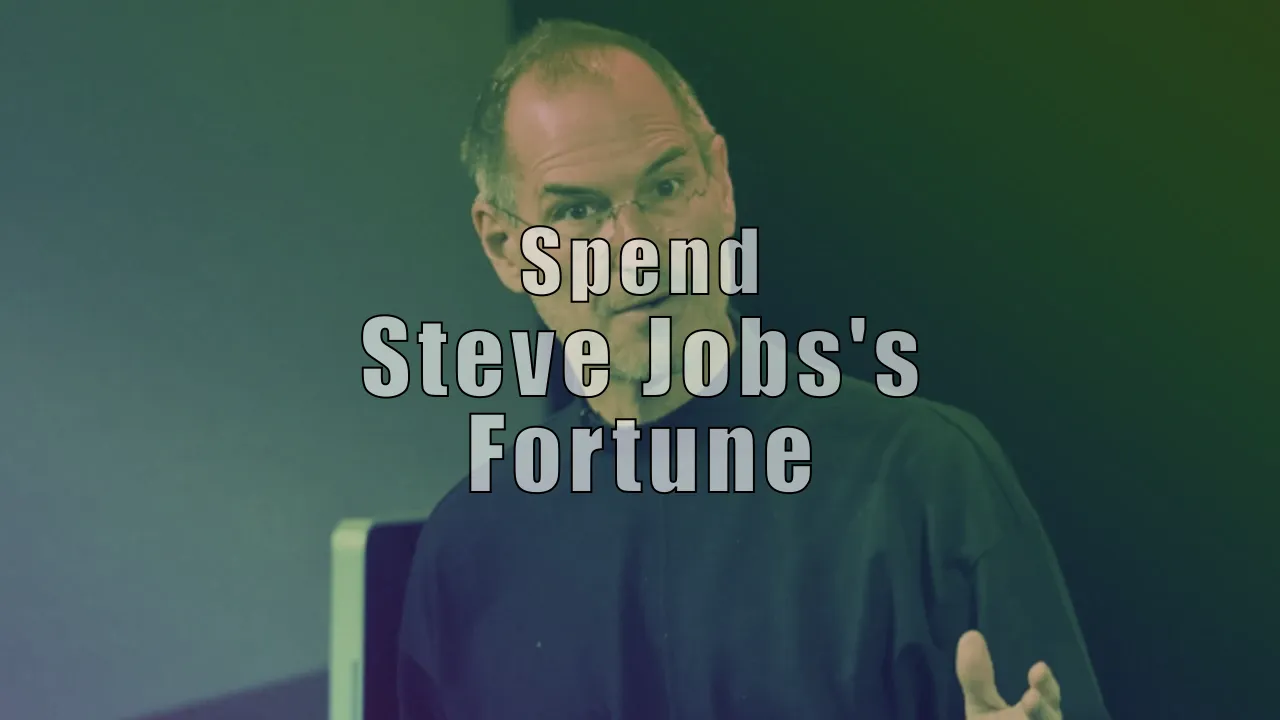
Steve Jobs's Fortune
About Steve Jobs
Steve Jobs, born on February 24, 1955, in San Francisco, California, and passing on October 5, 2011, was an American entrepreneur, inventor, and technology pioneer.
He co-founded Apple Inc. in 1976 with Steve Wozniak and Ronald Wayne, revolutionizing personal computing with the Apple II, Macintosh, and later iPod, iPhone, and iPad, which defined the modern smartphone era.
Jobs also led Pixar Animation Studios from 1986 to 2006, producing hits like Toy Story, and served as Apple's CEO from 1997 until his death, fostering a culture of design excellence and innovation.
A college dropout from Reed College, Jobs was influenced by Zen Buddhism and calligraphy, shaping Apple's minimalist aesthetic; his life story, including his adoption and return to Apple, inspired the 2011 biography by Walter Isaacson and films like the 2015 biopic starring Michael Fassbender.
Jobs' legacy endures in Apple's 2025 valuation exceeding $3.5 trillion and his influence on tech culture, though his management style was often described as demanding and visionary.
How did Steve Jobs become rich?
At the time of his death in 2011, Steve Jobs' net worth was estimated at approximately $10.2 billion by Forbes and Bloomberg, primarily from his 5.5 million Apple shares (valued at ~$2.1 billion) and Disney's acquisition of Pixar for $7.4 billion in stock.
His estate, managed by widow Laurene Powell Jobs, has grown substantially; by 2025, the family's wealth exceeds $20 billion through inherited Apple equity and investments via Emerson Collective, though Jobs' personal fortune remains pegged to 2011 figures in historical reporting.
Jobs avoided cashing out much during his life, believing in long-term value; post-mortem sales and dividends have added billions, with Laurene's net worth alone at ~$16 billion in 2025.
How does Steve Jobs spend money?
Steve Jobs embodied minimalist Zen principles in his spending, rejecting ostentation despite billionaire status; he lived in a modest Palo Alto home bought for $1.5 million in 1991 (now worth ~$20 million) and drove a silver Mercedes SL55 AMG without license plates for years.
His lifestyle emphasized simplicity—wearing the same black turtleneck daily (designed by Issey Miyake)—and focused on product innovation over personal luxury; Jobs invested in high-quality experiences like Japanese gardens at home and frequent trips to India for spiritual retreats.
Philanthropy was understated; he donated anonymously to causes like education, but avoided the Giving Pledge, citing a desire for direct impact; family time with Laurene and their three children was prioritized, with vacations at their Woodside estate.
Notable Purchases
Jobs' most iconic acquisition was the 17,000-acre Jackling House in Woodside, California, bought in 1984 for $1.7 million and controversially demolished in 2011 after a long preservation battle, replaced by a modern 11,250-square-foot mansion costing ~$50 million to build.
He commissioned the 256-foot superyacht Venus from Feadship, designed by Philippe Starck in Apple's minimalist style, completed posthumously in 2012 at over $130 million—featuring teak decks, floor-to-ceiling windows, and no ostentatious logos.
Automotive highlights include multiple Mercedes-Benz SL55 AMGs (~$130,000 each), chosen for their sleek design, and a rare 1966 Tiffany 27-foot Cobra roadster valued at $1.5 million, reflecting his appreciation for engineering elegance.
Bizarrely personal: Jobs collected rare Japanese ukiyo-e prints and spent ~$100,000 on a custom home audio system; no overly extravagant splurges, but his Pixar stake 'purchase' via NeXT acquisition indirectly yielded billions.